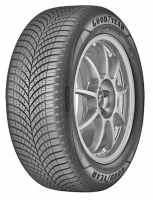
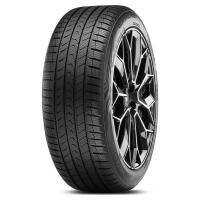
Below is the data from the Sport Auto all season tire test. Their test vehicle was a sporty Hyundai i20N, and they included named reference summer and winter tires, which is always nice (even if the summer tire was the Asymmetric 3, a tire originally launched over 10 years ago!)
Another key point is that the wet tests were done at cold conditions, "significantly below ten degrees", and around 7c for wet braking. Many of the all season tires out performed the summer tire, however as the summer tire is not current it's hard to say whether a modern summer tire would have performed better.
In dry braking from 100-0 km/h, the summer reference tire (Goodyear Eagle F1 Asymmetric 3) led the pack with a stopping distance of 35.3 meters. The worst performing tire was the winter reference tire (Goodyear UltraGrip Performance 3) at 43.4 meters - an 8.1 meter difference that could be crucial in emergency situations. The all-season tires fell between these two extremes, with the Michelin CrossClimate 2 coming closest to summer tire performance at 37.2 meters.
Dry Braking
Spread: 8.10 M (22.9%)|Avg: 39.83 M
Dry braking in meters (100 - 0 km/h) (Lower is better)
Goodyear Eagle F1 Asymmetric 3 Ref
35.30 M
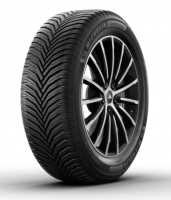
Michelin CrossClimate 2
37.20 M
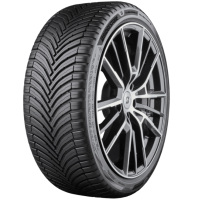
Bridgestone Turanza All Season 6
38.00 M
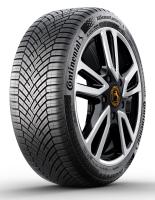
Continental AllSeasonContact 2
39.10 M
Goodyear Vector 4Seasons Gen 3
41.70 M
Vredestein Quatrac Pro Plus
41.70 M
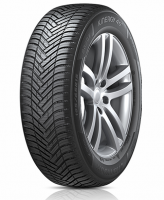
Hankook Kinergy 4S2
42.20 M
Goodyear UltraGrip Performance 3 Ref
43.40 M
The dry handling test showed similar trends, with the summer reference tire again setting the benchmark at 101.2 km/h average speed. The winter reference tire was slowest at 97.6 km/h, 3.6 km/h behind the leader. The Continental AllSeasonContact 2 performed best among the all-season tires with 100.4 km/h, showing that modern all-season tires can deliver handling performance close to dedicated summer tires in dry conditions.
Dry Handling
Spread: 3.60 Km/H (3.6%)|Avg: 99.59 Km/H
Dry Handling Average Speed (Higher is better)
Goodyear Eagle F1 Asymmetric 3 Ref
101.20 Km/H
Continental AllSeasonContact 2
100.40 Km/H
Hankook Kinergy 4S2
99.80 Km/H
Bridgestone Turanza All Season 6
99.60 Km/H
Vredestein Quatrac Pro Plus
99.50 Km/H
Goodyear Vector 4Seasons Gen 3
99.40 Km/H
Michelin CrossClimate 2
99.20 Km/H
Goodyear UltraGrip Performance 3 Ref
97.60 Km/H
Wet
The wet tests revealed interesting results, with the all-season tires often outperforming both reference tires. In wet braking from 80-0 km/h, the Bridgestone Turanza All Season 6 stopped in just 31.9 meters, while the summer reference tire needed 35.2 meters - a substantial 3.3 meter difference. The winter reference tire landed in the middle of the pack at 34.3 meters.
Wet Braking
Spread: 3.30 M (10.3%)|Avg: 33.65 M
Wet braking in meters (80 - 0 km/h) (Lower is better)
Bridgestone Turanza All Season 6
31.90 M
Hankook Kinergy 4S2
32.70 M
Vredestein Quatrac Pro Plus
32.80 M
Continental AllSeasonContact 2
33.70 M
Michelin CrossClimate 2
34.10 M
Goodyear UltraGrip Performance 3 Ref
34.30 M
Goodyear Vector 4Seasons Gen 3
34.50 M
Goodyear Eagle F1 Asymmetric 3 Ref
35.20 M
Wet handling showed the Continental AllSeasonContact 2 leading at 79.9 km/h, with both reference tires posting identical speeds of 77.8 km/h. The 2.5 km/h spread from best to worst (Michelin CrossClimate 2 at 77.4 km/h) was relatively small, suggesting modern all-season tires have achieved good wet handling balance.
Wet Handling
Spread: 2.50 Km/H (3.1%)|Avg: 78.56 Km/H
Wet Handling Average Speed (Higher is better)
Continental AllSeasonContact 2
79.90 Km/H
Hankook Kinergy 4S2
79.70 Km/H
Goodyear UltraGrip Performance 3 Ref
78.90 Km/H
Goodyear Vector 4Seasons Gen 3
78.80 Km/H
Vredestein Quatrac Pro Plus
78.20 Km/H
Goodyear Eagle F1 Asymmetric 3 Ref
77.80 Km/H
Bridgestone Turanza All Season 6
77.80 Km/H
Michelin CrossClimate 2
77.40 Km/H
In aquaplaning tests, the winter reference tire excelled, leading both straight aquaplaning at 77.2 km/h and curved aquaplaning at 2.67 m/s². The summer reference performed surprisingly well in second place for both tests. The all-season tires generally performed worse, with the Vredestein Quatrac Pro Plus showing particular weakness in straight aquaplaning at 71.1 km/h.
Straight Aqua
Spread: 6.10 Km/H (7.9%)|Avg: 74.08 Km/H
Float Speed in Km/H (Higher is better)
Goodyear UltraGrip Performance 3 Ref
77.20 Km/H
Goodyear Eagle F1 Asymmetric 3 Ref
75.40 Km/H
Hankook Kinergy 4S2
75.20 Km/H
Michelin CrossClimate 2
75.00 Km/H
Bridgestone Turanza All Season 6
74.20 Km/H
Continental AllSeasonContact 2
72.50 Km/H
Goodyear Vector 4Seasons Gen 3
72.00 Km/H
Vredestein Quatrac Pro Plus
71.10 Km/H
Curved Aquaplaning
Spread: 0.61 m/sec2 (22.8%)|Avg: 2.31 m/sec2
Remaining lateral acceleration (Higher is better)
Goodyear UltraGrip Performance 3 Ref
2.67 m/sec2
Goodyear Eagle F1 Asymmetric 3 Ref
2.63 m/sec2
Hankook Kinergy 4S2
2.42 m/sec2
Continental AllSeasonContact 2
2.25 m/sec2
Michelin CrossClimate 2
2.22 m/sec2
Bridgestone Turanza All Season 6
2.13 m/sec2
Goodyear Vector 4Seasons Gen 3
2.06 m/sec2
Vredestein Quatrac Pro Plus
2.06 m/sec2
Snow
The snow tests demonstrated the vast difference between summer and winter tires in cold conditions. The winter reference dominated all snow tests, stopping from 50-5 km/h in just 24.4 meters compared to the summer tire's dangerous 52.9 meters - more than double the distance. Snow handling showed an even more dramatic gap, with the winter tire achieving 50.4 km/h versus the summer tire's unsafe 14.3 km/h.
The all-season tires performed respectably in snow, with most achieving around 90% of the winter tire's performance. The Hankook Kinergy 4S2 was particularly strong across all snow tests, showing that all-season tires can provide viable winter performance for moderate climates.
Snow Braking
Spread: 28.50 M (116.8%)|Avg: 29.93 M
Snow braking in meters (50 - 5 km/h) (Lower is better)
Goodyear UltraGrip Performance 3 Ref
24.40 M
Hankook Kinergy 4S2
26.00 M
Michelin CrossClimate 2
26.30 M
Continental AllSeasonContact 2
26.50 M
Bridgestone Turanza All Season 6
26.90 M
Goodyear Vector 4Seasons Gen 3
27.10 M
Vredestein Quatrac Pro Plus
29.30 M
Goodyear Eagle F1 Asymmetric 3 Ref
52.90 M
Snow Traction
Spread: 1.22 N (77.7%)|Avg: 1.32 N
Pulling Force in Newtons (Higher is better)
Goodyear UltraGrip Performance 3 Ref
1.57 N
Hankook Kinergy 4S2
1.50 N
Michelin CrossClimate 2
1.49 N
Bridgestone Turanza All Season 6
1.48 N
Continental AllSeasonContact 2
1.44 N
Goodyear Vector 4Seasons Gen 3
1.40 N
Vredestein Quatrac Pro Plus
1.34 N
Goodyear Eagle F1 Asymmetric 3 Ref
0.35 N
Snow Handling
Spread: 36.10 Km/H (71.6%)|Avg: 44.13 Km/H
Snow handling average speed (Higher is better)
Goodyear UltraGrip Performance 3 Ref
50.40 Km/H
Hankook Kinergy 4S2
49.60 Km/H
Michelin CrossClimate 2
48.80 Km/H
Continental AllSeasonContact 2
48.80 Km/H
Bridgestone Turanza All Season 6
47.70 Km/H
Goodyear Vector 4Seasons Gen 3
47.50 Km/H
Vredestein Quatrac Pro Plus
45.90 Km/H
Goodyear Eagle F1 Asymmetric 3 Ref
14.30 Km/H
Comfort
For noise, the Continental AllSeasonContact 2 was quietest at 71.2 dB, while the summer reference was loudest at 73.1 dB - a noticeable 1.9 dB difference./
Noise
Spread: 1.90 dB (2.7%)|Avg: 72.00 dB
External noise in dB (Lower is better)
Continental AllSeasonContact 2
71.20 dB
Hankook Kinergy 4S2
71.50 dB
Vredestein Quatrac Pro Plus
71.50 dB
Goodyear UltraGrip Performance 3 Ref
71.70 dB
Michelin CrossClimate 2
71.90 dB
Bridgestone Turanza All Season 6
72.50 dB
Goodyear Vector 4Seasons Gen 3
72.60 dB
Goodyear Eagle F1 Asymmetric 3 Ref
73.10 dB
Value
Rolling resistance testing showed the Continental AllSeasonContact 2 and Michelin CrossClimate 2 leading at 8.0 kg/t, with the Vredestein trailing at 9.8 kg/t. Both reference tires performed well in this metric, showing that specialized seasonal tires don't necessarily compromise efficiency.