
Menu

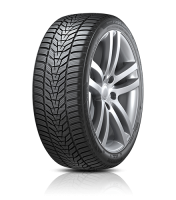
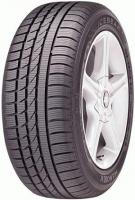
Hankook Icebear W300

The Hankook Icebear W300 is a Ultra High Performance Winter tire designed to be fitted to Passenger Cars.

6.2
Tire Reviews Score Based on User Reviews
Limited Confidence View Breakdown
Dry Grip
76%
Wet Grip
64%
Road Feedback
77%
Handling
74%
Wear
71%
Comfort
70%
Buy again
65%
10 Reviews
71% Average
43,840 miles driven
Hankook Icebear W300

Hankook Icebear W300

Winter Premium
BETA
6.2 / 10
Based on User Reviews · Limited Confidence · Updated 23 Feb 2026

The Tire Reviews Score is the most comprehensive tire scoring system available. It aggregates professional test data from multiple independent publications, user reviews, and consistency analysis using Bayesian statistical methods, weighted normalisation, and recency-adjusted scoring to produce a single, reliable performance rating.

Learn more about our methodology
Score Components
Professional Tests
Weight: 80%
Tests: 0
Publications: 0
User Reviews
Weight: 15%
Reviews: 10
Avg Rating: 71%
Min Required: 5
Consistency
Weight: 5%
Score Std Dev: 1.86
History Points: 10
Methodology & Configuration
Scoring Process
  1. Collect Test Data: Gather results from professional tire tests across multiple publications. Minimum 1 test(s) required.
  2. Normalize Positions: Convert test positions to percentile scores using exponential weighting (factor: 1.2).
  3. Apply Recency Weighting: More recent tests are weighted higher with a decay rate of 0.95.
  4. Incorporate User Reviews: Factor in user review data (minimum 5 reviews). Weight: 15%.
  5. Bayesian Smoothing: Apply Bayesian prior (score: 7, weight: 1.5) to prevent extreme scores with limited data.
  6. Calculate Final Score: Combine all components using normalization factor of 1.1. Max score with limited data: 9.5.
Component Weights
Test Data
80%
User Reviews
15%
Consistency
5%
All Configuration Parameters
ParameterValueDescription
safety_weight 0.7 Weight multiplier for safety-related metrics
performance_weight 0.55 Weight multiplier for performance metrics
comfort_weight 0.4 Weight multiplier for comfort metrics
value_weight 0.45 Weight multiplier for value-for-money metrics
user_reviews_weight 0.15 How much user reviews contribute to the final score
test_data_weight 0.8 How much professional test data contributes to the final score
consistency_weight 0.05 How much score consistency contributes to the final score
recency_decay_rate 0.95 Rate at which older test results lose influence (higher = slower decay)
min_test_count 1 Minimum number of professional tests required
min_review_count 5 Minimum number of user reviews required
score_version 1.9 Current version of the scoring algorithm
score_normalization_factor 1.1 Factor used to normalize raw scores to the 0-10 scale
confidence_factor_weight 0.2 How much data confidence affects the final score
position_penalty_weight 0.2 Penalty applied for poor test positions
gap_penalty_threshold 12 Score gap (%) that triggers additional penalties
min_metrics_count 2 Minimum number of test metrics needed per test
limited_data_threshold 2 Number of tests below which data is considered limited
single_test_penalty 0.75 Score multiplier when only one test is available
critical_metric_penalty 0.7 Penalty for poor performance on critical safety metrics
critical_metric_threshold 70 Score below which a critical metric penalty applies
position_exponential_factor 1.2 Exponent used to amplify position-based scoring
position_exponential_threshold 0.9 Position percentile below which exponential scoring applies
gap_multiplier_critical 3 Multiplier for critical gap penalties
max_category_weight 2 Maximum weight any single category can have
max_score_limited_data 9.5 Score cap when data is limited
bayesian_prior_weight 1.5 Weight of the Bayesian prior in smoothing
bayesian_prior_score 7 Prior score used for Bayesian smoothing
evidence_test_multiplier 1.9 Multiplier for test evidence in confidence calculation
evidence_metric_divisor 3 Divisor for metric count in evidence calculation
evidence_review_divisor 10 Divisor for review count in evidence calculation
combined_penalty_floor 0.2
All Tests

Sorry, we don't currently have any magazine tire tests for the Hankook Icebear W300

Questions and Answers for the Hankook Icebear W300

Ask a question
Sorry, we don't currently have any questions and answers for the Hankook Icebear W300. Why not submit a question to our tire experts using the form below!
Ask a question

We will never publish or share your email address

captcha

To verify you are human please type the word you see in the box below.

Top 3 Hankook Icebear W300 Reviews

Given 43% while driving a BMW 330d M Sport (225/45 R17) on a combination of roads for 8,000 average miles
A pretty poor tire. Dry grip is ok but feedback limited and noise levels quite high. Wet grip is very weak, on a powerful car the back end is easy to step out in these conditions. Snow has not been an issue so far but in sleet and ice they have yet to inspire confidence.
April 2, 2018
Given 67% while driving a BMW Z4 3.0 (255/35 R18 W) on a combination of roads for 20 spirited miles
These came fitted to my 04 BMW Z4 3.0.
I had them on all summer and through most of the winter.

In the summer they were a good tire and held the road well even on 30+ degrees centigrade days. They could be pushed to loose traction but it was very progressive in breaking away and did not snatch back. Lots of fun if not the fastest way from a-b.

Winter use, wet grip isn't amazing but they aren't a wet focused tire so to be expected, I. The 255 section aqua planing a little at the rear would happen with some standing water.
The limit of traction could be found at very small amounts over what would be considered sedate driving in the z4.

Snow, used in North yorkshire. They handled snow and ice much better than an all year round/rain tire. Noticeable improvement. Hill starts on half an inch of snow (no Tarmac) were pretty easy. It was still essential to drive to the conditions I.e atleast a third off speed 20-25 mph. Driving in this way sees good traction and no silly incidents getting stuck. The same hill taken with brand new cooper zeon sport tires saw me going nowhere with the lightest dusting of snow.

Summary, a good entry level winter tire that will keep you moving in bad weather all be it slowly.
February 4, 2015
Given 74% while driving a Volkswagen Scirocco 1.6 GT (185/60 R14) on a combination of roads for 20 easy going miles
After two years driving an old Porsche in the snow, it was a nightmare.
I bought an old Scirocco and a set of icebears.
The combination of a lightweight low powered car on very soft tires is brilliant.
It stops on the proverbial sixpence in the deepest snow and howls around corners while the four wheel drive stuff trying to keep up just flies into the ditches.
These are brill.
Great in the wet too, but they come off in April because it looks like they wear rapidly when things warm up.
Seen them formular one drivers going through the puddles to keep their rubber cools?
That's me that is.

Very good but appear to wear rapidly, I think two years / ten thousand miles max.
Bloody fun miles though!

February 1, 2013

How would you rate the Hankook Icebear W300?

Click a star to start your review

Latest Hankook Icebear W300 Reviews

Given 60% while driving a Volkswagen Golf GTI (225/45 R17) on mostly town for 0 average miles
Two years on an 09 GTI, with no snow on the roads work well in the cold weather. In deeper snow trying to take off on a slight incline from a stop is impossible. Worse then most all season tires. Would not recommend and will not re-buy.
February 7, 2013
Given 41% while driving a Mercedes Benz E Class (245/45 R17) on a combination of roads for 10,000 average miles
Very bad traction on snow and ice. Extreme wear in 10000 miles, could use only one season and replaced them. Extremely sliding on snow and ice and nearly impossible to keep the car on the road.
October 31, 2012
Given 83% while driving a Ford Mondeo (225/40 R18) on mostly country roads for 20,000 average miles
great tires use them all year bit more road noise but this dosnt really bother me great in any type of snow been on my car 2 years done about20000 miles but the side walls are beginning to crack mostly on the inside wall.talked to tire supplier he reconed they had been ran at too low a pressure i check pressures fairly regulaly and never had to top them up much wonder if any one else has had a similer problem
November 20, 2011
Given 79% while driving a Ford Focus C Max (205/50 R17) on a combination of roads for 2,000 average miles
Living in Scotland, Winters never fun especially the one we just had but I've got to admit the car performed superb. I only purchased it in october and didn't realise I had winter tires on until the snow hit and I was driving around leaving everyone else spinning. I cruised past 34 cars on one particular hill where I work and couldn't believe what a difference the tires made. The only down side is I've been told in dry conditions they can affect your fuel consumption and I think I believe them as my 1.6 C-max's mpg is poor but won't know for sure till I change the tires for the spring.
February 19, 2011
Given 86% while driving a BMW 123d (225/40 R18 V) on a combination of roads for 1,500 spirited miles
In dry conditions for the first 300 miles or so - its like driving on bars of soap, HOWEVER, once worn in, these tires are very good. They aren't high performance summer tires, so dont drive like they are. Once the Ice and snow has kicked in - you will be gob smacked at the difference these babies make to winter driving. BMW's - especially 1 series are HORRIFIC in ice and snow. Walking is both faster and safer. With these on, I have driven up icy and snowy banks that had Quattro Audi's stuck at the bottom. Slush, snow, Ice, heavy rain, these tires keep on going when all around are slipping and sliding! Yes you can still provoke rear drive fun still(Im pushing 260bhp after a remap)with drifts / sliding is VERY controlled. Highly recommended! And comfier than RFT's even in XL format!
December 26, 2010
Given 88% while driving a Citroën xsara picasso (185/65 R15 H) on a combination of roads for 1,300 average miles
Over the last 2 months I've driven these tires in all types of Winter conditions: Ice, compacted snow, fresh snow, slush, wet cold roads. They give excellent grip and on two occasions have given good traction to allow pulling away on an icy incline which has seen 4x4's (including a Land Rover Defender) slide. Clearly no winter tire will give licence to drive without due respect for slippery conditions but these tires have allowed me to travel where otherwise it would not be possible. I can't yet comment on how these tires wear, although no signs are showing yet.
December 19, 2010
Given 91% while driving a BMW 320D (215/55 R16 V) on mostly country roads for 1,000 average miles
First experience of snow tires entirely positive. While other brands might score higher in tests, these kept me mobile in some of the worst conditions I have ever experienced. Fresh snow, compacted snow, ice, slush- these tires totally transform the driving experience of the BMW in winter conditions. No wheelspin, no flashing lights on the dashboard (except on greasy tarmac???) Very little road noise, comfortable ride...I'm a big fan.
December 13, 2010
Rate the Hankook Icebear W300