Menu
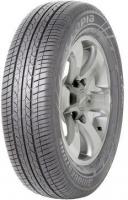
Bridgestone Ecopia EP25 View Gallery (1)
175-195/50-65 R15-16 8 sizes 2010

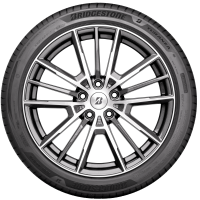
Bridgestone Ecopia EP25

The Bridgestone Ecopia EP25 is a Premium Touring Summer tire designed to be fitted to Passenger Cars.

6.4
Tire Reviews Score Based on User Reviews
Limited Confidence View Breakdown
Dry Grip
65%
Wet Grip
46%
Road Feedback
65%
Handling
62%
Wear
58%
Comfort
64%
Buy again
32%
13 Reviews
56% Average
195,595 miles driven
Bridgestone Ecopia EP25

Bridgestone Ecopia EP25

Summer Premium
BETA
6.4 / 10
Based on User Reviews · Limited Confidence · Updated 23 Feb 2026

The Tire Reviews Score is the most comprehensive tire scoring system available. It aggregates professional test data from multiple independent publications, user reviews, and consistency analysis using Bayesian statistical methods, weighted normalisation, and recency-adjusted scoring to produce a single, reliable performance rating.

Learn more about our methodology
Score Components
Professional Tests
Weight: 80%
Tests: 0
Publications: 0
User Reviews
Weight: 15%
Reviews: 13
Avg Rating: 55.8%
Min Required: 5
Consistency
Weight: 5%
Score Std Dev: 0.04
History Points: 10
Methodology & Configuration
Scoring Process
  1. Collect Test Data: Gather results from professional tire tests across multiple publications. Minimum 1 test(s) required.
  2. Normalize Positions: Convert test positions to percentile scores using exponential weighting (factor: 1.2).
  3. Apply Recency Weighting: More recent tests are weighted higher with a decay rate of 0.95.
  4. Incorporate User Reviews: Factor in user review data (minimum 5 reviews). Weight: 15%.
  5. Bayesian Smoothing: Apply Bayesian prior (score: 7, weight: 1.5) to prevent extreme scores with limited data.
  6. Calculate Final Score: Combine all components using normalization factor of 1.1. Max score with limited data: 9.5.
Component Weights
Test Data
80%
User Reviews
15%
Consistency
5%
All Configuration Parameters
ParameterValueDescription
safety_weight 0.7 Weight multiplier for safety-related metrics
performance_weight 0.55 Weight multiplier for performance metrics
comfort_weight 0.4 Weight multiplier for comfort metrics
value_weight 0.45 Weight multiplier for value-for-money metrics
user_reviews_weight 0.15 How much user reviews contribute to the final score
test_data_weight 0.8 How much professional test data contributes to the final score
consistency_weight 0.05 How much score consistency contributes to the final score
recency_decay_rate 0.95 Rate at which older test results lose influence (higher = slower decay)
min_test_count 1 Minimum number of professional tests required
min_review_count 5 Minimum number of user reviews required
score_version 1.9 Current version of the scoring algorithm
score_normalization_factor 1.1 Factor used to normalize raw scores to the 0-10 scale
confidence_factor_weight 0.2 How much data confidence affects the final score
position_penalty_weight 0.2 Penalty applied for poor test positions
gap_penalty_threshold 12 Score gap (%) that triggers additional penalties
min_metrics_count 2 Minimum number of test metrics needed per test
limited_data_threshold 2 Number of tests below which data is considered limited
single_test_penalty 0.75 Score multiplier when only one test is available
critical_metric_penalty 0.7 Penalty for poor performance on critical safety metrics
critical_metric_threshold 70 Score below which a critical metric penalty applies
position_exponential_factor 1.2 Exponent used to amplify position-based scoring
position_exponential_threshold 0.9 Position percentile below which exponential scoring applies
gap_multiplier_critical 3 Multiplier for critical gap penalties
max_category_weight 2 Maximum weight any single category can have
max_score_limited_data 9.5 Score cap when data is limited
bayesian_prior_weight 1.5 Weight of the Bayesian prior in smoothing
bayesian_prior_score 7 Prior score used for Bayesian smoothing
evidence_test_multiplier 1.9 Multiplier for test evidence in confidence calculation
evidence_metric_divisor 3 Divisor for metric count in evidence calculation
evidence_review_divisor 10 Divisor for review count in evidence calculation
combined_penalty_floor 0.2
All Tests

Sorry, we don't currently have any magazine tire tests for the Bridgestone Ecopia EP25

Size Fuel Wet Noise
15 inch
185/65 R15 88 T C B 70
175/65 R15 84 H C C 70
185/65 R15 88 T C B 70
185/55 R15 82 T C D 70
185/65R15 88 T B C 68
185/65R15 88 T C C 68
175/65R15 84 H C C 70
175/65R15 88 H XL C C 70
16 inch
185/60 R16 86 H C D 70
195/50 R16 84 V D C 71
195/50R16 84 V D C 71
View All Sizes and EU Label Scores for the Bridgestone Ecopia EP25 >>

Questions and Answers for the Bridgestone Ecopia EP25

Ask a question
Sorry, we don't currently have any questions and answers for the Bridgestone Ecopia EP25. Why not submit a question to our tire experts using the form below!
Ask a question

We will never publish or share your email address

captcha

To verify you are human please type the word you see in the box below.

Top 3 Bridgestone Ecopia EP25 Reviews

Given 66% while driving a Toyota Yaris (175/65 R15) on mostly country roads for 27,000 average miles
The tire behaved great for what it is and stayed largely consistent for most of its life.

The standout thing that I'd like to raise some awareness about was how much and how quickly it degraded during the fifth year of its life (the last 4-5k miles of its ~27k mile life) and while still having plenty of tread on it. It was apparent under a few specific recurring circumstances, out of which the most obvious and most common was on tight horseshoe turns. If the front tires were loaded due to braking (just slight amounts of braking, consider that one enters the turn under brakes and gradually lifts so that they are fully released potentially before hitting the apex) they were eager to lose traction and slide outwards when nearing the apex. We are talking about just slight amounts of skidding that required no corrections from the driver. They were essentially just enough to affect your confidence in the car. Still, it was something that started happening relatively suddenly and consistently and we became aware of it both during trips & travels and on familiar corners on known roads where we had been taking the car for years and years.

Other than that most other characteristics remained relatively consistent till the end. That is their noise, their general braking performance (though, luckily, I didn't have the "opportunity" to do much emergency braking), their behavior under high speed turns, their traction under first gear acceleration (say uphill stop and go, or with a heavy foot off a green light).

Lastly, I didn't feel too comfortable riding them in heavy rain lately, but that was a rare enough occurrence that I don't have enough experience to express an informed opinion on.

When I retired it it still had plenty of tread on it so I assume most of the degradation in performance was probably caused by the rubber aging.
August 11, 2025
Given 39% while driving a Nissan Note (185/60 R16) on a combination of roads for 5,000 average miles
extremely danger in wet even you drive at speed 40kM/H
November 30, 2022
Given 43% while driving a Mazda 2 SP (225/45 R17) on a combination of roads for 8,495 average miles
Absolutely useless. Only lasted 8,495 miles compared with previous Dunlop's 40,600. Soft as butter
March 22, 2019

How would you rate the Bridgestone Ecopia EP25?

Click a star to start your review

Latest Bridgestone Ecopia EP25 Reviews

Given 59% while driving a Toyota Yaris (175/65 R15 H) on a combination of roads for 20,000 average miles
OEM summer tires. I drove them for 20000miles or 37000km. Dry grip and handling was good, even now when they have 5< mm of rubber left on them. Wet grip and handling was good but not perfect. In the city they were safe on wet, but on the open road and higher speeds than 70kmh very unsafe and extremly laud. Straight aqua was better even when driving above 120kmh. Wear was ok, but i wouldnt recommend them for any other driver except those who drive only in the city. I am changing them now for Dunlop Sport Bluresponse.
March 25, 2020
Given 73% while driving a Peugeot 208 1.5 BlueHDi (185/65 R15 T) on mostly motorways for 10,000 spirited miles
These tires are OEM on the car, with Treadwear 200 Temperature B Traction B
and EU labelling C for economy, B for wet braking and 70db.

Taking into account that the tire is an enviromentally friendly tire and not a sports one, here is what I think:

Dry braking is really good with no surprises whatsoever. I had an emergency braking because of a wild hog crossing the road and the tire outperformed the traction of the tarmac and the weather conditions, meaning you could tell it could have decelerated more without losing grip had the asphalt been completely dry and more rough.

Handling is also very good, despite the softness of the tire. This softness is present only in cornering at a high speed, so for normal driving and everyday use the tires are perfectly fine.

Feedback is also very good, you get on the wheel what you see on the road, so happy there, too.

On wet grip, I disagree with other people claiming the tire sucks. Yeah, it sucks if you think you're riding on a UHP tire. Keep in mind it's not a performance tire, with a Traction B rating, so prudence and reservation are mandatory on wet public roads where indifference, incompetence, arrogance and pure stupidity are also present.
Having said that, I think the Ecopia EP25 holds no surprises for the knowledgeable driver. Driving on the wet 20-30km/h less than on dry roads will give you the same results as in the dry.

Wet braking is mediocre at best at lower speeds (up to 80km/h) with the ABS engaging a bit more than I expected. This is the first reason I will not choose them again or recommend them, as well as the wear rate.

On the other hand, straight aqua is surprisingly good, even at 2cm of water, cutting through water ponds easily.

Wear is fast for these tires. In 15.000km of 95% motorway use they have got down to 6,1mm of tread, which is a bad result for me, being an old Michelin user. In comparison, Michelin Energy Saver+ started at 7,2mm losing 0,5mm of tread every 10.000km on the same conditions (mind you, the Michelins are Treadwear 400).

Noise is annoying. Only on newly-paved surfaces will there be silence in the cabin; otherwise, get ready for a continuous roar or get a pair of ear-plugs.

All in all, I would choose my Michelin Saver+ over the Ecopia25 time and again, simply because they are better.

November 1, 2019
Given 44% while driving a Peugeot 208 1.2VTi (185/65 R15 T) on a combination of roads for 3,300 average miles
I have covered 3300 miles on these tires so far. The dry grip is quite good and the wear, so far is also good, used about 1.5mm. The ride is comfortable, but a little noisy at speed. The wet grip however is appalling and can be quite dangerous. For this reason I will not be purchasing them again.
April 22, 2018
Given 84% while driving a Peugeot 208 XY 1.6 HDI (185/65 R15 T) on mostly country roads for 40,000 easy going miles
Standard tire with the car (Peugeot 208 1.6 HDI) and can't complain. They were not too loud, good fuel economy and hard wearing. Roughly 20-25000 miles on a set though I was changing with winter tires for half the year so hard to estimate. I've used these tires in cold temperatures and they seem to grip like normal though in the wet (incl. summer) you do feel a slight difference in grip, not much though. Good tire all round.
December 12, 2017
Given 41% while driving a Toyota Verso S (225/45 R17) on mostly country roads for 15,000 average miles
I had to put these on a Verso S because the official Dunlop 2030 was not available at the time (!) - it is an unusual size. They have been OK but a bit noisy, no real problems, till the fronts wore down to between 3 and 4 mm and the wet grip evaporated, after 15000 miles. I normally change when the tread is down to 3mm, but I replaced the fronts with Yokohamas after a worrying experience on a wet hill. The reduction in road noise was immediately noticeable, especially on better surfaces. I wouldn't buy them again because there seem to be better alternatives. Of course tires do vary from lot to lot and according to your usage, so I should emphasise this is a personal opinion and not the result of scientific testing.
September 21, 2016
Given 87% while driving a Toyota Yaris (185/55 R16 T) on a combination of roads for 25,000 spirited miles
EP25's are the standard fitment tire on the Toyota Yaris in Australia since 2011 on all hatch variants (3 and 5 door).

Although they're about $200 each and I've yet to have to replace them at 25,000miles they are definitely worth the price for a quality made-in-Japan low rolling resistance tire.

I drive on all roads however at least half of my road time is spent on highways (100/110km/h respectively).

On the highway the tires are quiet, absorb road imperfections nicely, have little vibration & most importantly have EXCELLENT resistance to aqua-planing even during torrential rain at 110km/h where you cannot see 3 car lengths in front of you.

Their braking performance is also very impressive.

The only downside to these tires is something you get with all high quality low-rolling resistance tires and that's the price - the fact they're made in Japan means a lot - many lesser tires are made in China, Thailand, Malaysia etc and you can tell the difference.

These tires are great because in Australia - snow/winter tires are not sold so when the temperature drops below 8C most tires harden up and lose their grip - the special compound of these Ep25's keeps them supple even as the temp outside nears freezing so you still maintain grip during the winter months - very important when you can't buy winter tires in Australia.
March 22, 2015
Given 50% while driving a Toyota iq (225/45 R17) on a combination of roads for 25,000 spirited miles
Perfectly suitable dry road tires, feel light in handling and low-wear rate on motorways. non confidence inspiring in damp or frosty conditions however with anything aproaching a mid to high lateral excersion especially on off camber surfaces. reasonably high wearing in general but tread suffered mostly from 'spirited' roundabouts and hairpin bends during understeer...
September 26, 2011
Given 37% while driving a Toyota iq (225/45 R17) on mostly town for 12,000 easy going miles
the standard tire on the IQ2 is worse than I had on my first car 30 years ago and they squeal very loud at low speeds.
have to change them at 12000 miles because they were so bad!
July 16, 2011
Given 45% while driving a Subaru Legacy (215/45 R17 R) on mostly country roads for 1,000 average miles
I have found these tires extremely dangerous in the wet. The slightest bit of wet on a smooth bit of tarcel - the car planed. Going over a slight bump whilst turning even in dry conditions - the rear tires struggle to renew grip and give the sensation of the rear of the car almost giving a little side ways jump. I am going in to get rid of these dangerous tires today. Nearly 2 accidents in one journey yesterday with planing (first day driving in the wet with them). Tire pressures have been checked and were fine.
July 7, 2011
Rate the Bridgestone Ecopia EP25