
Menu

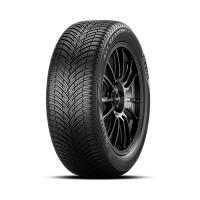
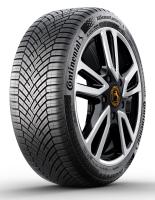
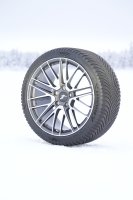
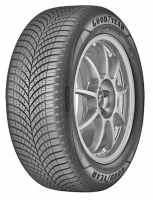
Goodyear Vector 4Seasons Gen 3

The Goodyear Vector 4Seasons Gen 3 is a premium touring all-season tire built around confidence and consistency when conditions turn wet, cold or snowy. Across both independent tests and real-world ownership, it stands out for secure wet handling, strong winter competence and an easy, predictable feel through big temperature swings. It also tends to deliver good longevity and makes a compelling case for year-round convenience over seasonal tire changes.

9.3
Tire Reviews Score Based on Professional Tests & User Reviews
High Confidence View Breakdown
Dry Grip
82%
Wet Grip
86%
Road Feedback
77%
Handling
78%
Wear
85%
Comfort
82%
Buy again
81%
Snow Grip
82%
Ice Grip
74%
68 Reviews
81% Average
809,443 miles driven
39 Tests (avg: 4th)
Goodyear Vector 4Seasons Gen 3

Goodyear Vector 4Seasons Gen 3

All Season Premium
BETA
9.3 / 10
Based on Professional Tests & User Reviews · High Confidence · Updated 23 Feb 2026

The Tire Reviews Score is the most comprehensive tire scoring system available. It aggregates professional test data from multiple independent publications, user reviews, and consistency analysis using Bayesian statistical methods, weighted normalisation, and recency-adjusted scoring to produce a single, reliable performance rating.

Learn more about our methodology
Ice
91.5
0.84x / 2 tests
Snow
83.8
1.38x / 106 tests
Wet
79.5
1.93x / 145 tests
Comfort
75.8
0.32x / 42 tests
Value
75.5
0.42x / 62 tests
Dry
66.5
1.5x / 70 tests

Cross-category scores are derived metrics that combine data from multiple test disciplines to evaluate real-world performance characteristics.

Traction
87.4
28 tests
Handling
82
98 tests
Braking
74.9
111 tests
Score Components
Professional Tests
Weight: 80%
Tests: 40
Publications: 11
Period: 2020 - 2025
User Reviews
Weight: 15%
Reviews: 68
Avg Rating: 80.9%
Min Required: 5
Consistency
Weight: 5%
Score Std Dev: 0.38
History Points: 10
Methodology & Configuration
Scoring Process
  1. Collect Test Data: Gather results from professional tire tests across multiple publications. Minimum 1 test(s) required.
  2. Normalize Positions: Convert test positions to percentile scores using exponential weighting (factor: 1.2).
  3. Apply Recency Weighting: More recent tests are weighted higher with a decay rate of 0.95.
  4. Incorporate User Reviews: Factor in user review data (minimum 5 reviews). Weight: 15%.
  5. Bayesian Smoothing: Apply Bayesian prior (score: 7, weight: 1.5) to prevent extreme scores with limited data.
  6. Calculate Final Score: Combine all components using normalization factor of 1.1. Max score with limited data: 9.5.
Component Weights
Test Data
80%
User Reviews
15%
Consistency
5%
All Configuration Parameters
ParameterValueDescription
safety_weight 0.7 Weight multiplier for safety-related metrics
performance_weight 0.55 Weight multiplier for performance metrics
comfort_weight 0.4 Weight multiplier for comfort metrics
value_weight 0.45 Weight multiplier for value-for-money metrics
user_reviews_weight 0.15 How much user reviews contribute to the final score
test_data_weight 0.8 How much professional test data contributes to the final score
consistency_weight 0.05 How much score consistency contributes to the final score
recency_decay_rate 0.95 Rate at which older test results lose influence (higher = slower decay)
min_test_count 1 Minimum number of professional tests required
min_review_count 5 Minimum number of user reviews required
score_version 1.9 Current version of the scoring algorithm
score_normalization_factor 1.1 Factor used to normalize raw scores to the 0-10 scale
confidence_factor_weight 0.2 How much data confidence affects the final score
position_penalty_weight 0.2 Penalty applied for poor test positions
gap_penalty_threshold 12 Score gap (%) that triggers additional penalties
min_metrics_count 2 Minimum number of test metrics needed per test
limited_data_threshold 2 Number of tests below which data is considered limited
single_test_penalty 0.75 Score multiplier when only one test is available
critical_metric_penalty 0.7 Penalty for poor performance on critical safety metrics
critical_metric_threshold 70 Score below which a critical metric penalty applies
position_exponential_factor 1.2 Exponent used to amplify position-based scoring
position_exponential_threshold 0.9 Position percentile below which exponential scoring applies
gap_multiplier_critical 3 Multiplier for critical gap penalties
max_category_weight 2 Maximum weight any single category can have
max_score_limited_data 9.5 Score cap when data is limited
bayesian_prior_weight 1.5 Weight of the Bayesian prior in smoothing
bayesian_prior_score 7 Prior score used for Bayesian smoothing
evidence_test_multiplier 1.9 Multiplier for test evidence in confidence calculation
evidence_metric_divisor 3 Divisor for metric count in evidence calculation
evidence_review_divisor 10 Divisor for review count in evidence calculation
combined_penalty_floor 0.2
Data Sources
TestPublicationDateSizePositionMetrics
2025 Autobild Crossover SUV All Season Test Auto Bild Sportscars 2025 215/50 R18 4/12 13 metrics
2025 TUV Test of Nokian SeasonProof 2 vs Rivals TUV 2025 205/55 R16 5/5 8 metrics
2025 Auto Bild Sports Car All Season Tire Test Auto Bild Sportscars 2025 225/45 R18 5/12 14 metrics
2025 Autobild SUV All Season Tire Test Auto Bild Allrad 2025 215/55 R17 5/13 14 metrics
2025 Die Reifentester Winter Tire Test Die Reifentester 2025 215/55 R17 8/8 12 metrics
The Best All Season Tires for 2025/26 Tire Reviews 2025 205/45 R17 4/11 15 metrics
2025 TUV Hankook iON FlexClimate EV Report TUV 2025 235/45 R18 3/5 7 metrics
2025 ADAC All Season Tire Test ADAC 2025 225/45 R17 1/16 13 metrics
2025 Auto Bild All Season Camper Van Tire Test Auto Bild 2025 245/45 R18 5/11 13 metrics
Best SUV All Season Tires for 2025 Tire Reviews 2025 235/55 R18 3/9 16 metrics
2025 Summer and All Season Combined Tire Test UTAC 2025 225/45 R17 14/14 8 metrics
2024 Sport Auto All Season Tire Test Sport Auto 2024 215/40 R18 5/8 11 metrics
2024 Auto Express All Season Tire Test Auto Express 2024 205/55 R16 5/7 0 metrics
2024 Auto Bild SUV All Season Tire Test Auto Bild Allrad 2024 245/45 R18 5/12 13 metrics
2024 All Season and Winter Tire Test Auto Zeitung 2024 215/55 R17 1/10 13 metrics
2024 AutoBild All Season Tire Test Auto Bild 2024 225/50 R17 4/17 17 metrics
2024 Minivan / SUV All Season Tire Test Auto Bild Allrad 2024 235/55 R17 3/14 13 metrics
2024 All Season Tire Market Overview Auto Bild 2024 225/50 R17 6/37 2 metrics
2024 ADAC All Season Tire Test ADAC 2024 205/55 R16 1/16 13 metrics
2024 Sports Car All Season Tire Test Auto Bild Sportscars 2024 225/40 R18 3/13 13 metrics
2024 Motorhome Camper Van All Season Tire Test 2024 235/55 R17 1/8 14 metrics
2024 Sport Auto Summer Tire Test Sport Auto 2024 215/40 R18 6/6 9 metrics
2023 Auto Zeitung All Season Tire Test Auto Zeitung 2023 215/55 R17 1/9 13 metrics
2023 Auto Bild All Season Tire Test Auto Bild 2023 225/45 R17 6/18 17 metrics
2023 All Season Tire 35 Set Shootout Auto Bild 2023 225/45 R17 12/35 2 metrics
2023 Tire Reviews All Season Tire Test Tire Reviews 2023 195/65 R15 2/12 14 metrics
2023 TUV Report All Season Test 2023 205/55 R16 4/4 8 metrics
2022 Sport Auto All Season Tire Test Sport Auto 2022 235/35 R19 5/8 13 metrics
2022 Auto Bild All Season Tire Test Auto Bild 2022 195/55 R16 1/17 19 metrics
2022 All Season Tire Market Overview Auto Bild 2022 195/55 R16 6/37 2 metrics
2022/23 Tire Reviews All Season Tire Test Tire Reviews 2022 225/45 R17 3/10 12 metrics
2021 Auto Bild All Season Tire Test Auto Bild 2021 225/50 R17 1/18 15 metrics
2021 All Season Tire Market Overview Auto Bild 2021 225/50 R17 3/34 2 metrics
2021 Tire Reviews All Season Tire Test Tire Reviews 2021 205/55 R16 5/11 14 metrics
2021 AZ All Season Tire Test Auto Zeitung 2021 205/55 R16 3/9 15 metrics
2020 Auto Express All Season Tire Test Auto Express 2020 225/45 R17 2/6 0 metrics
2020 Auto Bild SUV All Season Tire Test Auto Bild 2020 215/60 R16 3/13 11 metrics
2020 Auto Bild All Season Tire Test Auto Bild 2020 205/55 R16 1/16 12 metrics
2020 All Season Tire Market Overview - 32 Tire Braking Test Auto Bild 2020 205/55 R16 4/33 2 metrics
2020 Tire Reviews All Season Tire Test Tire Reviews 2020 225/45 R17 1/11 17 metrics

Videos

The BEST All Season Tires For 2025/26 - Tested and Reviewed

The BEST All Season Tires For 2025/26 - Tested and Reviewed

The Best All Season Tires for 2025! I Tested the New Nokian vs Rivals

The Best All Season Tires for 2025! I Tested the New Nokian vs Rivals

Best 10 All Season Tires for 2023/24 - Tested in the Dry, Wet and Snow!

Best 10 All Season Tires for 2023/24 - Tested in the Dry, Wet and Snow!

The Best 10 All Season / All Weather Tires for 2022/23 Tested and Rated!

The Best 10 All Season / All Weather Tires for 2022/23 Tested and Rated!

39
Tests
4th
Average
1st
Best
14th
Worst
Latest Tire Test Results
4th/11
Excellent dry handling, good wet braking with best wet handling, good snow performance, well balanced tire.
Long dry braking, high rolling resistance.
Next up was the Goodyear Vector 4Season Gen-3, so you know we're in the REALLY good section of tires already. As usual, the goodyear was not the best in dry braking, but worked well in dry handling, it was great in the wet, it was solid in the snow, and had good comfort, if I'm honest I'm shocked it was only 4th. Its overall placement was impacted by its rolling resistance, where it was 8th and 16.3% behind the lowest, but it's still a great tire.

Highly Recommended 2025 All Season Test Goodyear Vector 4Seasons Gen 3
3rd/9
Very good dry handling, the best in wet handling, good on snow, the best noise and comfort levels.
Reduced aquaplaning resistance, above average rolling resistance.
The Goodyear Vector 4Seasons Gen 3 is just as I remember it. It was was great in dry handling, though not the best in dry braking, the best in wet handling and very good wet braking, though again like the Hankook it struggled a little in the deeper water, it was very good in the snow, though not quite up to the Hankook, had excellent noise and comfort, like the Hankook, and its rolling resistance was the same as Hankook. This tire is aging in years but is still an excellent choice.

Highly Recommended 2025 All Season Test Goodyear Vector 4Seasons Gen 3
5th/13
The Goodyear Vector 4 Seasons Gen-3 positions itself as a snow specialist that also delivers high performance levels in wet conditions. This tire particularly excels in winter scenarios, offering outstanding traction, confident handling, and short braking distances on snow-covered roads that approach dedicated winter tire capabilities. In wet conditions, the Goodyear maintains strong performance with predictable handling and good aquaplaning resistance. However, this winter-focused optimization comes at a cost on dry roads, where extended braking distances prevent the tire from achieving a better overall result. The handling on dry pavement remains acceptable but lacks the sharpness of more summer-biased competitors. For drivers in regions with harsh winters who still need occasional dry-road capability, the Goodyear makes a compelling case, though those in milder climates might find better-balanced alternatives.
Size Fuel Wet Noise
14 inch
175/65R14 86 H XL C B 69
185/60R14 86 H XL C B 70
175/65R14 86 H XL D B 69
15 inch
185/65R15 92 T XL C B 70
195/65R15 95 V XL C B 71
185/65R15 92 V XL C B 70
185/65R15 92 T XL B C 70
195/65R15 95 T XL C B 71
195/65R15 95 V XL C B 71
16 inch
205/55R16 94 V XL C B 70
205/60R16 96 V XL C B 70
205/55R16 91 V C B 70
215/60R16 99 V XL C B 71
205/55R16 94 V XL A B 72
205/60R16 96 V XL C B 70
205/60R16 92 H C B 69
205/60R16 96 V XL A C 71
205/55R16 94 V XL A B 72
17 inch
225/45R17 94 W XL C B 70
205/50R17 93 W XL C B 71
215/55R17 98 W XL B B 70
215/45R17 91 W XL C B 70
225/50R17 98 W XL C B 70
215/55R17 98 W XL B B 70
225/50R17 98 W XL D B 71
225/45R17 94 W XL D B 71
215/55R17 98 W XL A B 71
215/55R17 94 V B B 71
215/55R17 98 W XL A B 71
215/55R17 94 V B B 71
215/55R17 98 W XL B B 70
18 inch
225/40R18 92 Y XL C B 72
245/40R18 97 W XL C B 72
245/45R18 100 Y XL B B 72
235/60R18 103 T B B 71
255/35R18 94 Y XL C B 72
19 inch
235/35R19 91 Y XL D C 72
20 inch
255/45R20 105 W XL C B 72
245/35R20 95 W XL C B 72
255/45R20 105 T XL C B 72
255/45R20 105 H XL C B 72
View All Sizes and EU Label Scores for the Goodyear Vector 4Seasons Gen 3 >>

Questions and Answers for the Goodyear Vector 4Seasons Gen 3

Ask a question
July 2, 2020

I bought a brand new set of this tires for my Audi A3, size 225/45 R17, to replace my 7 year old winter tires. Now I can hear a very obvious bumping noise coming from tires, at about 40 to 50km/h. I can kind of feel it on the steering wheel too. Never heard that before with any winter nor all-season tires, let alone summer tires. Two separate garages checked the car, including Audi, and said they could no find anything wrong, and that the noise may be normal for those tires. Can this be the case? Has anyone had the same experience with these tires? I am really quite unhappy with them.

This is certainly not the fault of the tires, unless they've been stored incorrectly and have gone "out of round" or been damaged internally. I'd keep complaining to the garage! One option would be to have the fronts and rears swapped to see if the noise moves, and if so you know there's a wheel / tire issue.
October 31, 2020

Been looking at these to fit on a Gen 10 Honda Civic 1.5 turbo which is a reasonably quick car and has good handling, I am just a little concerned regarding dry braking, do these tire make an appreciable difference compared to the OE tires which are Michelin Primacy 3?

Check out our <a href="/Article/2020-Tire-Reviews-All-Season-Tire-Test.htm">all season tire test</a> which has a reference summer tire in to show you the difference between this and a summer tire.
May 25, 2021

I have to fit my Hyundai Tucson with new tires. I have to choose between Goodyear 4season Gen 3 and Michelin crossclimate plus. My main focus is on treadlife and dry and wet performance. What should I choose?

The two tires seem to be relatively similar in wear, the Michelin better in the dry and the Goodyear has the edge in the wet. If you've not seen it, check out our <a href="/Article/2020-Tire-Reviews-All-Season-Tire-Test.htm">all season tire test from 2020</a> as that should give you all the details.
October 20, 2022

Is the Goodyear Vector 4Seasons Gen 3 also available in a RunFlat version?

Yes in certain sizes there are runflat versions of the Vector 4Seasons Gen-3
November 23, 2022

Hello! I been choosing new tires for Ford Kuga MK1 SUv with 4x4 120kW. I checked all tests which i found on yuour website and i want to buy Goodyear Vector 4Seasons G3, but i found there are two types of tires - Vector 4Seasons G3 with index H99 which is still good for me and Vector 4Seasons G3 SUV with index 103Y, my question is do i need to buy SUV variant or should be good the first variant? Because on SUV variant there are not that much tests like the first variant. Thanks

The overall performance of the non-suv and suv versions should be very similar. If the Kuga is ok with a 99 load rating then pick whatever is cheaper.
July 5, 2023

Just imported these tires from UK to AUS to use as my winter tires. Now moving to the USA for 3 years. Put about 10000kms on them. Think they will store well for 3 years?

As long as you store properly, you should be ok for another year of use after your return. Make sure they're kept out of direct sunlight and if possible keep them inside where there isn't extreme temperatures.
July 8, 2023

Are these tires any good on black ice?

Generally no tires outside of soft compound / nordic winter tires perform on ice, however of the all seasons I would expect these to be one of the better ones.
Ask a question

We will never publish or share your email address

captcha

To verify you are human please type the word you see in the box below.

Review Summary

Based on 66 user reviews

Across most reviews, the Goodyear Vector 4Seasons Gen 3 is described as a highly capable all-round tire with standout wet-road security (strong grip, wet braking, and aquaplaning resistance) and confidence in cold conditions including snow for an all-season. Many drivers also report very good longevity/wear and a generally quiet, comfortable ride. The most repeated drawbacks are a softer, less precise steering/feedback feel and slightly weaker dry braking/traction when pushed in warm or hot conditions compared with dedicated summer tires.

Strengths
  • Excellent wet grip and strong aquaplaning resistance
  • Very capable in cold weather
  • Slush and snow for an all-season tire
  • Long tread life/slow wear and good value over mileage
  • Comfortable ride and generally low road noise
  • Stable
  • Predictable handling and confidence-inspiring all-round performance
Areas for Improvement
  • Softer/less direct steering feel with reduced feedback (can feel floaty/wallowy on some cars)
  • Dry braking/traction not as strong as dedicated summer tires
  • Especially in warm/hot conditions or when driven hard

Top 3 Goodyear Vector 4Seasons Gen 3 Reviews

Given 86% while driving a Ford Focus MK3 (225/45 R17) on a combination of roads for 15,000 spirited miles
Having them already for more than 18000km (more than one and a half year) these tires perform very nicely.
On dry very well, lot more than average grip
Next generation could improve the braking (when the weather is hot). However they are not bad.
On wet the grip is good (can be improved on next generation). The driver has to be sure the tires have the best tire pressure. If they don't the grip will not be good on muddy-dusty parts of the road. If the tire's pressure is correct then they perform well.
Tested them on very cold (not freezing) to very hot (higher than 40C), they performed very well, on dry and wet.
Their shape and condition is still very nice despite the use and the time.
They can perform well (cautiously of course) even on sporty driving.
Even under heavy load their performance remains steady (tire pressure has to be right).
Next generation could be improved on the things mentioned above.
Overall they are above average -to excellent on dry, wet, cold, very warm, rain, braking and handling.
8,0 plus/10 clearly.
Of course if they keep up like this, they will be the first option again.
August 1, 2025
Given 68% while driving a Lexus NX 300h (235/55 R18) on mostly motorways for 30,000 easy going miles
Have been driving with these for almost 50000km now, been through Nordic winters, European summer heat waves etc, temperatures ranging from -20C up to over +30C, wet and dry, everything.
When they were brand new, it was difficult to fault these tires. They preformed better than the aging premium Nordic winter tires in the snow. Comfort good, dry performance as good as you could expect, wet performance was also fine.
After 50000km they all have around 5.5-6 mm left. However, the way the treads are designed meant that around the centre line, they have less than 1mm left at this stage (there is no uneven wear or under/over pressure, tracking on the car is checked yearly, no punctures/repairs) - the base of the tire has a V shape so the centre of the tire also start with less mm when they were brand new. This interesting design and wear pattern meant that there is now a significant drop in performance: aquaplaning risk increased dramatically, wet grip is completely gone, braking performance in all conditions deteriorated. Noise also increased significantly.
So even those most of the tires still have more than 5.5mm left, they need to be replaced. They have become almost dangerous under all conditions.
Perhaps they were designed this way, but I was expecting more even and consistent performance through the lifespan of the tires. Unfortunately I will not buy them again.
August 1, 2025
Given 83% while driving a Ford Focus MK3 (205/55 R16) on a combination of roads for 3,750 spirited miles
Almost time to switch back to my summer tires. So, here’s my impression of my “mild climate winter” tires. I used to drive on Continental WinterContact TS860 winter tires, but last winters, I noticed that I almost never drive on snow. And in spring and fall, when temperatures jump up and down, I was sometimes driving on my winter tires at temperatures around 20°C. So now, I followed your advice and chose All Season tires for the winter season. I drove them for about 6.000 km now in temperatures between -2 and +16 °C, in the dry and in lots of rain.
Just after switching to the Vector 4S, I had the same feeling as when I changed to winter tires: I felt a bit unsecure while driving: compared to my summer tires (Continental PremiumContact 6) the road contact of the V4S is noticeably less direct. Better than a winter tire, but worse than a summer tire. Once you realise the grip is actually present, the confidence comes back quickly. In fact, in terms of safety, I see it as a good thing: because it is so much fun to go quickly with the PC6, I sometimes feel tempted to go just that bit faster. The V4S isn’t that inviting, so I drive slower. Safe in winter, fun in summer, I can live with that.
And in terms of grip, the V4S does an excellent job: In the dry, it is more than sufficient. The steering feedback is obviously less than with the PC6, but still more than enough to know what’s going on. In the wet, I was impressed by the grip on near freezing wet surfaces and by the aquaplaning resistance. And when the tires start sliding, it all goes very gradually and controllable. Such a safe and stable tire! In all aspects better and more pleasant than the TS860, which to be honest didn’t do bad at all for a winter tire in the dry and in the wet.
Unfortunately, I didn’t get a chance to test the tires on real snow. On muddy roads, light snow, frost and in salted snow/ice slush however, the V4S provides sufficient grip to steer, accelerate and brake without problems. In such conditions, other cars on summer tires are the biggest risks one can encouter anyway, so I drive extra carefully then.
Comfort (noise and suspension) is just fine. Slightly better than the TS860 and way better than the PC6.
I noticed an increase in fuel consumption of about 0,2 l/100 km when driving in similar conditions as with the summer tires.
In terms of wear, the tires lost about 0.4 mm. tread depth (almost no difference between front and rear), which is in line with the AutoBild wear test (70.000 km). If I replace the tires at the minimum winter tire depth (4 mm.), I will be able to drive about 50.000 km on them. Very reasonable (My PC6 front tires will last about 30.000 km).
In short: thank you Goodyear for getting me safely through the winter season. And now let’s get the Conti’s back on!
March 24, 2023

How would you rate the Goodyear Vector 4Seasons Gen 3?

Click a star to start your review

Latest Goodyear Vector 4Seasons Gen 3 Reviews

Initial Impressions Review
Given 77% while driving a Citroën C5 X hybrid 225 (205/55 R19) on for 3,000 miles
This is a further update on the Goodyears. Previously I had complained about the poor fuel consumption with these tires. After 3,000 miles, there has been some improvement hence this review. However I estimate I am still around 2 mpg down with these tires.

I have never experienced this before with new tires, but it has taken over 2,000 miles for these Goodyear Vector 3’s to ‘bed in’. There is definitely less resistance from the tires now, and the car will freewheel further. Fuel consumption has improved, but it is still not as good as my previous tires - Kleber Quadraxer 3’s. Apart from that gripe, the tires are excellent.

I drive a lot in Italy and generally the locals don’t hang around. So you need a car that is agile and tires that will grip well. Certainly on wet and greasy roads, the Goodyears really hold on. Wet braking is good too. I have not had a chance to try them on snow or ice.

The Goodyears make the car feel more chuckable and it changes direction without hesitation. The ride quality though, maybe because of this, is not so forgiving. It is just a question now of how long they will last, and when their performance might start to drop off.

In the future I will certainly pay more attention to the rolling resistance of tires, and will choose a tire with the lowest. It really does seem to make a difference.
February 8, 2026
Initial Impressions Review
Given 87% while driving a Mitsubishi carisma (185/65 R14) on for 12,500 miles
I based my buy in this website, basically because my vehicle, a Mitsubishi Carisma of 1997, uses 14 inch wheels, a diameter that's getting deprecated in the release of new gen tires, and I needed more information about the best models I could choose, I had to choose between this model and the Hankook kinergy 4s2 and I chose Goodyear cause they seem to endure more mileage, although hankook may be a better bang for the buck. I haven't had this car enough to test more tires that this one, but overall, my experience has been great, most time I've driven this car is on a dry road and sometimes wet but I live in a pretty dry territory, I have tried to make a more "sporty" use to see what these tires are capable of and it has an amazing grip, I feel like it's incredibly hard to lose control, something I find specially important since my car has no ABS or ESP or TCS to compensate.

In terms or reliability I have to say I had an small leak recently on the rear left tire which lead me to repair it but after a quick and cheap visit to the mechanic it gave me no more problem.

In terms of noise, considering I haven't measured it specifically I would say these are very silent, most of the noise I hear with this car is aerodynamic, the engine or certain parts of the interior due to their age, I tried the car on sound-absorbing asphalt that has been recently installed in my town and that absorbs around 75% of the rolling noise, other cars I've experienced to hear had a massive difference but not with mine, which leads me to think that there is not so much noise to absorb from the tires.

I hope these to be my tires for a loong time, for now it seems like it's the case since the tire wear with this mileage is minimal.
February 4, 2026
Check out how the BEST all seasons tires perform against premium summer and winter tires!
Initial Impressions Review
Given 79% while driving a Honda Civic 1.8 5 door (205/55 R16) on for 38,000 miles
Tires have held up well. Purchased 5 years ago with a 4 month old DOT date. Cost was 290 Euro for all 4. Average 12000km yearly. Have been swapped front to back axle a few times to even out the wear and last longer. The pictures are how they look after all that wear and tear. Temperate climate country in Southeast Europe, They have seen up to 42c in the summer and -15c in the winter. I purchased them with the knowledge that I will barely see any snow and do 90% city driving. Car has always been parked outside and the tires have noticeable dry rot after all that sun.

They handled very well on the 3-4 occasions they were met with heavy snow on winding roads, even with tens of thousands if miles already on them. Barely any TCS activation and slippage when driving smart. Managed to dig out of snow with no hassle any time I was parked and snowed in.
Dry performance is excellent, nothing bad to say, handling is excellent. Comfort and noise are also very good.

Wet performance is the one thing that I feel was not up to par. At around the three year mark, TCS would activate more often than I would expect when accelerating from a start on cold tires on wet asphalt. No problems in breaking or cornering, but the wheelspin on acceleration was annoying and a bit questionable.

Overall I can recommend, and I would buy them again if the price is right.
January 22, 2026
Given 88% while driving a Audi A3 (225/40 R18) on for 8,000 miles
I have been running these tires now on my Audi A3 for over 2 years, and they have been some of the best tires I've ever used. They give me confidence when the temperature drops, they've held up really well even when temperatures hit 40 degrees Celsius in 2024, and they did me proud when I went to the Nürburgring. I have pushed these tires beyond what would reasonably be considered its designed limits and they have never let me down.

Comfort-wise, they certainly are not the best. I can quite often feel the bumps quite hard through the car, but that is the only negative in my opinion. It may well just be down to the tire size.

I would certainly consider buying these again in the future.
January 20, 2026
Given 81% while driving a Vauxhall Corsa 1.4T (215/45 R17) on a combination of roads for 20,000 spirited miles
Fantastic fantastic fantastic. What a tire. It was winter a couple of years ago in my Corsa, and had some budget summers on. The tires locked up in a car park and ended up very slowly hitting a van. barely any damage but the fact i coulndnt do anythign was scary, so that day went and bought 2 of these for th Corsa. And boy what a purchase. Instantly the snow grip was unbelivable for an all season tire. Chewed up snow with barely any wheelspin, this is a car with no TCS by the way. Ice was not terrible. The wet was fantastic too, and every since i got these tires i never. aquaplaned. again. For reference every time i got on the motorway in the wet with the budgets i used to be in all 3 lanes. This is on an 1100kg car. Dry grip was actually very suprisingly good too. Is it as good as a sporty dedicated summer tire? No. Is it going to hold you going way too fast on a country lane you've never been on? Probably not. Is it going to hold you on that country lane you do know, going a reasonably fast pace? Absolutely. I used this tire for around 2 years putting maybe 20,000 miles on them, and still had around 3mm on (when i sold the car, not when the tires were changed). I believe they'd have another 6-9 months / 5000-7500 miles in them at least. This corsa had 195bhp and 300nm at specifically 1088kg, and these tires kept up in drag races, country lanes, and every day driving. This review isn't for the middle aged parent who wants some nice all year tires for their crossover suv. This is the review i wish i had at 18 for these tires, that has been there and done it. In the smaller size that you're small hatchback has, they're very reasonably priced, and will do you well. Now in an M235i, I'm using Michelin PS5s which are in a different category of tires, and I have a seperate review on. Mainly due to 326bhp, and the same driving style.
December 18, 2025
Given 65% while driving a Citroën C5 X hybrid 225 (205/55 R19) on mostly motorways for 2,000 easy going miles
This is my second review of these tires. I have covered over 2,000 miles with them and my initial perceptions of these tires has been reinforced.

Although acceptable in other driving dynamics, the extremely high rolling resistance is a problem. My average fuel consumption has been increased from 5.4/ per 100 kms to 6.6/ per 100 kms at 115 kph. In mpg terms, the consumption has increased from an average on a long run of 49/51 mpg to 42/43 mpg. This is huge. I have been in contact with Goodyear technical UK, but they have not been much help. I watched the tires being fitted at Halfords - nothing else happened to the car. However the effect of these new tires was immediately noticeable. They are like driving on donuts is the best description I can find.

The tires are not only increasing my fuel consumption, but sap the power of the engine. I have never known tires to have such an adverse effect in nearly 50 years of driving. These tires are supposed to be B rated for rolling resistance. In my experience these tires do not compare to my previous tires with the same rating. Either the B classification for rolling resistance is wrong for these tires, or the category is extremely broad. With such a high rolling resistance, the extra cost of these tires over 50,000 miles is huge.

Goodyear is supposed to be a premium brand, but they are producing tires with the rolling resistance of a Budget tire. Tomorrow I will drive from northern France to Venice again. This is a regular run for me. I will be able to calculate how much extra in fuel these tires are costing me.
December 9, 2025
Given 85% while driving a Skoda Yeti (205/55 R16) on a combination of roads for 44,000 easy going miles
Purchased in January and March 2021. These have covered 44000 miles on the front of a front wheel drive Skoda Yeti 1.6 TDI and over 45000 on the rear. No noticeable difference on the factory originals for noise or fuel consumption. Winter grip appears much better than factory fit. Comfort is great. Obviously wear rate is good. I would expect 50000 miles out them. Only one driver and they gets used in all areas, country lanes and tracks through to motorway.
December 2, 2025
Given 65% while driving a Opel Astra H 1.4 (195/60 R15) on mostly country roads for 4,000 average miles
I used winter tires for several years. Since i moved to a place with only 2-3 days/year of snowfall and i drive on snow only on weekends for fun, i switched to all season tires. Last year i had to drive even during an extreme snow storm where the road was totally covered by snow and i was really impressed with the handling on the road. During 3-4 hours of driving never had a single disappointing moment and it felt to me as a winter tire [last winter tire used was nokian]. The temperature was about -10 C but i really didn't encounter any icy road.
On the other side, on wet but especially on dry it feels a bit "sticky" and not pleasant to drive.
At the moment i drove about 7000km and the tires seem brand new. Durability was my main concern and during summer time i drove less than 2000km with this car.
[Total driving experience about 600,000km]
December 1, 2025
Given 70% while driving a Citroën C5 X hybrid 225 (205/55 R19) on mostly motorways for 600 average miles
I have just had a set of these put on after 58,000 kms with Kleber Quadraxer 3 all season tires.

Yesterday I had my first long distance run in really dreadful wet conditions. The Goodyears performed well, but it was noticeable that when there was a lot of surface water, the Goodyear’s did not cope as well as the Klebers. Where the Klebers simply cut through the water, you can feel the car slowing down as the Goodyears clear the water.

In the wet and greasy conditions, the Goodyears offered excellent grip and inspired confidence. The handling of the car has improved with a more rapid response to directional changes.

What I have been shocked by is the drop in fuel economy of my car. It is huge. Where my 1.2 Citroen C5x would give 3.9L/100km at 115 kms with the Klebers, this is now 4.8L/100km. I will check the tire pressures and keep an eye on this, but if this does not improve, I will have to remove these Goodyear tires very soon.
November 10, 2025
Tyre reviews and ratingsTire Reviews Replies
New tires always have significantly higher rolling resistance than used, so new Klebers would also have an impact on your energy use. You can check out tests with rolling resistance metrics in to see if the Goodyear is worse than the Kleber at new, I'm sure there isn't that much in it.
Given 84% while driving a Honda 1.6 I DTEC (215/65 R16) on mostly motorways for 40,000 average miles
The Goodyear came with my car. I always have proper winter and summer tire sets, but these were less than 2 years old so I kept them. I knew they are all-season and didn't count too much on snow performance, but we don't get much snow anymore and I decided to give it a go for a couple of winters. I was amazed at how much traction these get on snow and ice. I drove in a blizzard more than once and had zero issues (AWD SUV), either with fluffy powder or with compacted hard snow. I did experience some lateral instability when it's extremely slippery, and also over frozen tire tracks, but I take into account they aren't a proper winter tire, I always adjusted to the conditions and never pushed hard. With thoughtful driving I never felt unsafe. I am very happy with how they perform in wet and dry, again zero issues even at 40C heat on the highway or during massive rain. I am now changing them due to tread wear and because they started to dry rot to the point one tire is leaking air through the side wall. It was surprising because they are dot 21 and started leaking in 24, so basically 3 years were enough to degrade the side wall. Now it's end of 25 and the other 3 tires still don't leak, but there's visible dry rot and cracks on all of them. But for something I got basically for free - what an excellent performance and balance in all driving conditions! Now I got my favorite snow powerhouse Kleber Krisalp HP3 and I will miss not having to swap and store tires.
October 16, 2025
Given 88% while driving a Suzuki Vitara 2015> (215/55 R17) on mostly motorways for 40,000 miles
WEAR
I bought these to fit to an all wheel drive Vitara and based in Italy with temps ranging from 35°C to -15°C. I've had them for 5 years, done 65K km and tread-wise they would probably last another year, so I couldn't be happier with how they've worn. They've only just started to lightly crack where the tread meets the sidewall, but given their age I'm going to replace them this winter.

SNOW
I chose the Vectors mainly because of their snow performance. Throughout the winter I spend a lot of time in the mountains where there is considerable snow and ice and they've performed exactly how I'd hoped. Snow traction, breaking and handing have been great, I've been able to drive confidently on snowy mountain roads, and especially with all wheel drive the car feels solid. I've watched BMWs slide backwards down hills with slick compact snow (I hope on summer tires) which have been easy to get up in the Vectors without any wheel spin at all. The same goes for -10°C frosty morning without snow, handling and traction feels the same as +10°C.

SUMMER
I've also used these a lot off-road in 30°C on dry rocky routes and they've performed really well, I assume because of the tread pattern and softer compound. Even in the summer at 35°C I haven't really noticed longer dry braking which people mention with the Vector.

NEGATIVES
The only really downsides I've noticed compared to the OE tires (Conti eco contact) is the handling generally feels 'softer'- although still fun to drive in a spirited way, and that the tires seems to slide on those metal joints on bridges which can be unnerving when on a corner.

BUY AGAIN?
I would definitely buy these again, in fact I've recommended them to many people. However, being a sucker for Tire Review's videos and tests, I want to try something else. I'll probably go for Pirelli Cinturato All Season SF3 for even better snow performance and an overall more balanced profile.
October 5, 2025
Given 79% while driving a Renault Grand Scenic (225/45 R17) on mostly country roads for 20,000 easy going miles
I believe tire wear is underrated. I just bought a new pair of Goodyear Vector Gen 3, they have stunningly low wear. If I'll buy the next tires 5 years from now instead of 3 or 4 because the Goodyear has lower wear, that pretty much makes the Goodyear cheaper than most budget tires (price/km).
I had the Goodyear Gen 3 on a Renault Scenic, used them for 20k km with literally no visible wear. We had 2 weeks of snow, my neighbors struggled to get out of the parking lot with cheap winter tires, I had no issues. My father also uses Goodyear Vector Gen 3 on another Scenic and after almost 5 years and 50k km he still has 4.5 mm of the fronts and 5mm on the rears and he says they are still excellent in the snow.
Yes, they are not the best on hot summer days, the lower dry traction and braking makes them squeal easily. They also aren't as quiet as a CrossClimate or a summer Premium Contact 5 or Eco Contact 6. And the steering feels a bit too light with them (when I put them on I felt like the car just got a new power steering).
But they are great in the wet, great in the snow, good enough in the dry and they last longer than any other tire I owned.
I used to run dedicated summer/winter tires, Michelin changed that with the CrossClimate, and Goodyear made sure I won't go back.
Just for reference, I owned:
- Continental Premium Contact 2: 55k km until 2.5mm tread
- Continental Premium Contact 5: 45k km until 2.5mm tread
- Continental Eco Contact 6: 40k km until 3mm tread
- Nokian WR D3: 45k km until 4mm tread
- Nokian WR D4: 35k km until 4mm tread
- Continental TS860: 40k km until 4mm tread
- Michelin CrossClimate: 40k km until 3.5mm tread
September 16, 2025
Rate the Goodyear Vector 4Seasons Gen 3