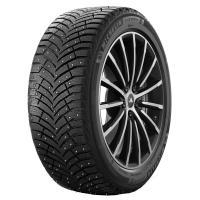
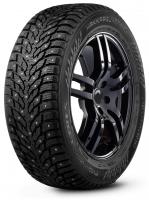
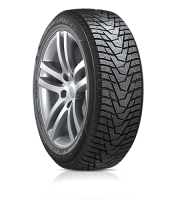
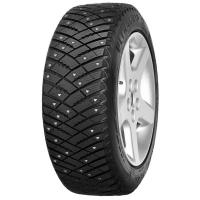
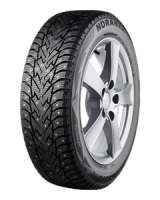
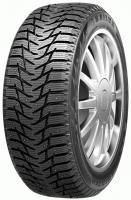
While studded tires don't have much use in the UK, for parts of the Nordic countries they are essential for safe mobility.
To find out which of the latest studded winter tires are worth fitting, Swedish magazine Vi Bilagare have tested seven studded winter tires in 225/50 R17, and included a studless nordic friction winter tire as a comparison.
Even if you don't live in an area that needs such an extreme winter tire, the difference in performance between the latest studded and studless winter tires is an interesting demonstration.
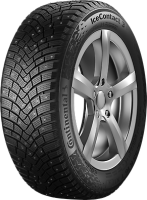
The main novelty of the test came from the new Continental IceContact 3, which is the first tire to use rubberised flexstud spikes. These studs claim to offer reduced road wear, while improving traction on ice.
Dry
During dry braking testing, the studless friction Continental VikingContact led the way with a significant gap to the best studded tire, which was also a Continental.
Dry Braking
Spread: 5.20 M (12.1%)|Avg: 46.49 M
Dry braking in meters (Lower is better)
Continental VikingContact 7
43.00 M
Continental IceContact 3
44.90 M
Goodyear UltraGrip Ice Arctic
46.20 M
Michelin X Ice North 4
46.70 M
Nokian Hakkapeliitta 9
47.10 M
Hankook Winter i pike RS2
47.80 M
Bridgestone Noranza 001
48.00 M
Sailun Ice Blazer WST3
48.20 M
Subj. Dry Handling
Spread: 3.00 Points (60%)|Avg: 3.13 Points
Subjective Dry Handling Score (Higher is better)
Michelin X Ice North 4
5.00 Points
Goodyear UltraGrip Ice Arctic
4.00 Points
Bridgestone Noranza 001
4.00 Points
Nokian Hakkapeliitta 9
3.00 Points
Hankook Winter i pike RS2
3.00 Points
Continental VikingContact 7
2.00 Points
Continental IceContact 3
2.00 Points
Sailun Ice Blazer WST3
2.00 Points
Wet
Wet braking testing swung the balance back to the studded tires, with the studded Continental tire stopping the test vehicle in the shortest distance. The studless winter tire could only manage a mid-group performance.
Wet Braking
Spread: 2.60 M (9%)|Avg: 30.50 M
Wet braking in meters (Lower is better)
Continental IceContact 3
28.80 M
Goodyear UltraGrip Ice Arctic
29.80 M
Nokian Hakkapeliitta 9
29.90 M
Bridgestone Noranza 001
30.80 M
Continental VikingContact 7
31.00 M
Michelin X Ice North 4
31.00 M
Sailun Ice Blazer WST3
31.30 M
Hankook Winter i pike RS2
31.40 M
Due to the tread design of studless friction tires, the studded tires all had a significant advantage during wet handling and aquaplaning testing.
Wet Handling
Spread: 2.47 s (5.7%)|Avg: 44.03 s
Wet handling time in seconds (Lower is better)
Nokian Hakkapeliitta 9
43.18 s
Goodyear UltraGrip Ice Arctic
43.59 s
Bridgestone Noranza 001
43.64 s
Hankook Winter i pike RS2
43.71 s
Sailun Ice Blazer WST3
44.00 s
Continental IceContact 3
44.12 s
Michelin X Ice North 4
44.37 s
Continental VikingContact 7
45.65 s
Straight Aqua
Spread: 5.20 Km/H (8.4%)|Avg: 59.10 Km/H
Float Speed in Km/H (Higher is better)
Hankook Winter i pike RS2
62.20 Km/H
Goodyear UltraGrip Ice Arctic
60.90 Km/H
Continental IceContact 3
60.30 Km/H
Sailun Ice Blazer WST3
58.60 Km/H
Bridgestone Noranza 001
58.20 Km/H
Michelin X Ice North 4
58.10 Km/H
Nokian Hakkapeliitta 9
57.50 Km/H
Continental VikingContact 7
57.00 Km/H
Snow
Continental dominated all three snow tests, with either their studded tire, or studless tire taking top spot. The budget Sailun Ice Blazer was extremely weak in all three tests.
Snow Braking
Spread: 2.50 M (15%)|Avg: 17.90 M
Snow braking in meters (Lower is better)
Continental VikingContact 7
16.70 M
Continental IceContact 3
16.90 M
Michelin X Ice North 4
17.90 M
Nokian Hakkapeliitta 9
18.00 M
Goodyear UltraGrip Ice Arctic
18.00 M
Hankook Winter i pike RS2
18.10 M
Bridgestone Noranza 001
18.40 M
Sailun Ice Blazer WST3
19.20 M
Snow Handling
Spread: 9.88 s (11.8%)|Avg: 87.77 s
Snow handling time in seconds (Lower is better)
Continental IceContact 3
83.75 s
Continental VikingContact 7
85.59 s
Michelin X Ice North 4
86.49 s
Nokian Hakkapeliitta 9
87.54 s
Hankook Winter i pike RS2
87.93 s
Bridgestone Noranza 001
88.07 s
Goodyear UltraGrip Ice Arctic
89.15 s
Sailun Ice Blazer WST3
93.63 s
Snow Traction
Spread: 0.52 s (12.8%)|Avg: 4.24 s
Snow acceleration time (Lower is better)
Continental VikingContact 7
4.05 s
Continental IceContact 3
4.06 s
Michelin X Ice North 4
4.17 s
Goodyear UltraGrip Ice Arctic
4.20 s
Nokian Hakkapeliitta 9
4.23 s
Hankook Winter i pike RS2
4.27 s
Bridgestone Noranza 001
4.40 s
Sailun Ice Blazer WST3
4.57 s
Ice
The new type of spike on the Continental IceContact 3 delivered on its promise of improved ice trip, winning both the ice traction and ice braking tests.
Ice Braking
Spread: 5.30 M (61.1%)|Avg: 10.64 M
Ice braking in meters (Lower is better)
Continental IceContact 3
8.67 M
Michelin X Ice North 4
9.42 M
Nokian Hakkapeliitta 9
9.68 M
Continental VikingContact 7
10.64 M
Goodyear UltraGrip Ice Arctic
10.87 M
Bridgestone Noranza 001
10.88 M
Hankook Winter i pike RS2
10.97 M
Sailun Ice Blazer WST3
13.97 M
Ice Traction
Spread: 2.44 s (58.9%)|Avg: 4.94 s
Ice acceleration time (Lower is better)
Continental IceContact 3
4.14 s
Nokian Hakkapeliitta 9
4.27 s
Michelin X Ice North 4
4.51 s
Bridgestone Noranza 001
4.88 s
Hankook Winter i pike RS2
4.94 s
Goodyear UltraGrip Ice Arctic
5.03 s
Continental VikingContact 7
5.16 s
Sailun Ice Blazer WST3
6.58 s
Perhaps the most interesting result of the test was the ice handling, as the studless friction tire beat ALL the studded tires! This was due to the types of ice used for testing. For traction and braking testing, smooth ice was used as it replicated ice found at junctions, but for ice handling, uneven ice was used which is closer to the icy surfaces you find on the open roads.
The testers did note one extra important point. When you lose grip on the studless tire, it takes much longer to recover the grip, which means they still recommend studded tires overall, as they will provide higher manoeuvrability and safety reserves in real life useage.